Overview
The Lean Startup introduces a systematic, scientific approach to building businesses in uncertain environments. Eric Ries challenges the traditional method of writing long business plans and spending months developing products before testing them in the market. Instead, he promotes rapid experimentation, validated learning, and continuous improvement.
The central premise of the book is that startups fail not because they lack effort, but because they build products that nobody actually wants. Ries teaches entrepreneurs how to test ideas quickly, gather real customer feedback, and adjust before wasting time and capital.
This book is ideal for entrepreneurs, startup founders, digital product creators, and small business owners launching new offerings. It is especially helpful for beginners because it replaces guesswork with structured experimentation.
The primary problem the book solves is product-market mismatch. Many entrepreneurs assume they know what customers want. The Lean Startup provides a framework for discovering what customers truly value before investing heavily in development.
For online businesses and digital product creators, this book is foundational. It teaches you to launch small, test quickly, and refine based on data rather than ego.
Don’t build your business blindly—use this step-by-step checklist to guide you. https://forms.gle/NkDJbu4xWS5BZv5Z9
Key Lessons and Core Concepts
1. Start with a Minimum Viable Product (MVP)
Explanation:
An MVP is the simplest version of a product that allows you to test your core assumption.
Why It Matters:
Launching early prevents wasting time building unnecessary features.
Example:
Instead of creating a 12-module course immediately, launch a 1-hour pilot version and gather feedback.
2. Build–Measure–Learn Feedback Loop
Explanation:
Every product idea should follow this cycle:
Build → Measure → Learn → Improve.
Why It Matters:
Continuous learning reduces failure risk.
Example:
Release a beta product, track user engagement, and revise based on feedback.
Once you understand how digital products work, everything else becomes easier:
👉 How to Sell Digital Products Online
Many beginners get stuck here—this guide breaks it down clearly:
👉 How to Price Digital Products
3. Validated Learning
Explanation:
Progress is measured by what you learn about customers, not by how much you build.
Why It Matters:
Vanity metrics (likes, followers) do not equal real validation.
Example:
Instead of celebrating website traffic, measure conversions and sales.
4. Pivot or Persevere
Explanation:
After testing, decide whether to adjust direction (pivot) or continue refining.
Why It Matters:
Stubbornly sticking to a failing idea wastes resources.
Example:
If customers ignore your digital download but engage with your templates, pivot toward templates.
5. Innovation Accounting
Explanation:
Track meaningful metrics that show real growth.
Why It Matters:
Clear data improves decision-making.
Example:
Measure customer acquisition cost and retention rate, not just revenue spikes.
With over 25 years of experience in the legal field, I focus on helping you set your business up correctly from the start—so you don’t have to fix mistakes later.
6. Small Batches Reduce Risk
Explanation:
Launch improvements in small increments rather than massive releases.
Why It Matters:
Small experiments are safer and faster.
Example:
Test pricing on a small group before changing it for everyone.
How to Apply This Book to Your Business
Launch a simple version of your product immediately.
Ask real customers for feedback early.
Track conversion rates instead of vanity metrics.
Run small experiments weekly.
Be willing to pivot based on evidence.
Document customer feedback systematically.
Reduce development time before testing.
Focus on solving one clear problem.
For online entrepreneurs:
• Launch beta versions.
• Use email surveys for feedback.
• Test offers before building full products.
Best Quotes from Eric Ries
“The only way to win is to learn faster than anyone else.”
Meaning: Speed of learning beats speed of building.
“We must learn what customers really want, not what they say they want.”
Meaning: Observe behavior, not opinions.
“A startup is a human institution designed to create a new product or service under conditions of extreme uncertainty.”
Meaning: Uncertainty is normal — structure is essential.
“The minimum viable product is that version of a new product which allows a team to collect the maximum amount of validated learning with the least effort.”
Meaning: Build small, learn fast.
“Success is not delivering a feature; success is learning how to solve the customer’s problem.”
Meaning: Learning is real progress.
Key Terms and Concepts Explained
Minimum Viable Product (MVP)
The simplest version of a product used to test assumptions.
Validated Learning
Evidence-based insights gathered from customer behavior.
Pivot
A strategic change in direction based on new data.
Innovation Accounting
Tracking meaningful metrics to measure progress.
Build–Measure–Learn Loop
A cycle of testing and refining ideas.
Who Should Read This Book
Best For:
• Startup founders
• Digital product creators
• Online entrepreneurs
• Business innovators
Less Useful For:
• Established corporations with stable product lines
Skill Level: Beginner to Intermediate
Final Verdict
The Lean Startup is one of the most practical entrepreneurship books written in the modern era. Its strength lies in replacing assumptions with structured experimentation.
The most powerful idea: Build small, test quickly, learn continuously.
For online entrepreneurs, this book can prevent months of wasted effort and thousands of wasted dollars.
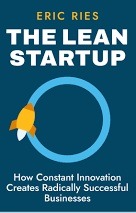
The Lean Startup by Eric Ries Book Summary
Try these related Wealth & Money Summaries:
Think and Grow Rich: Read Book Summary
The Psychology of Money: Read Book Summary
The Richest Man in Babylon: Read Book Summary
Loopholes of the Rich: Read Book Summary
Profits First: Read Book Summary
Smart Start-Up provides practical tools, checklists, and guides designed to help new entrepreneurs launch their business correctly from day one. Explore the full library of startup tools here.