Overview
Rich Dad Poor Dad challenges traditional beliefs about money, work, and financial security. The book compares two financial mindsets: Kiyosaki’s “Poor Dad” (his biological father, highly educated but financially struggling) and his “Rich Dad” (his friend’s father, less formally educated but financially successful).
The main premise of the book is simple yet powerful: the rich do not work for money—they make money work for them. Kiyosaki argues that schools teach people how to become employees, but rarely teach financial literacy, investing, or wealth-building strategies.
This book is written for anyone who wants to gain financial independence, especially entrepreneurs, small business owners, and individuals tired of living paycheck to paycheck. It is particularly helpful for beginners because it introduces foundational concepts like assets, liabilities, cash flow, and financial intelligence in plain language.
The primary problem the book solves is financial misunderstanding. Most people believe that earning a high salary guarantees wealth. Kiyosaki explains that wealth is not determined by income but by financial behavior—specifically, acquiring income-producing assets instead of accumulating expenses disguised as investments.
For entrepreneurs and online business builders, this book reframes how to think about income, investments, and long-term wealth.
Key Lessons and Core Concepts
With over 25 years of experience in the legal field, I focus on helping you set your business up correctly from the start—so you don’t have to fix mistakes later.
Lesson 1: The Rich Don’t Work for Money
Explanation:
Most people trade time for money. The rich focus on building systems and assets that generate income without constant labor.
Why It Matters:
If you only rely on earned income, your financial growth is limited by your time and energy.
Example:
Instead of freelancing hourly forever, build digital products that generate recurring revenue.
Lesson 2: Financial Education Is More Important Than Academic Education
Explanation:
Schools teach reading and math, but rarely teach investing, tax strategy, or cash flow management.
Why It Matters:
Without financial literacy, high earners can still end up financially insecure.
Example:
A business owner who understands tax deductions and reinvestment strategies keeps more profit than one who doesn’t.
Lesson 3: Understand the Difference Between Assets and Liabilities
Explanation:
An asset puts money in your pocket. A liability takes money out.
Kiyosaki simplifies it further:
Assets generate income. Liabilities generate expenses.
Why It Matters:
Many people buy liabilities (cars, expensive homes) thinking they are investments.
Example:
A rental property that produces monthly cash flow is an asset. A luxury car payment is a liability.
Lesson 4: Mind Your Own Business
Explanation:
Even if you have a job, you should build and grow assets on the side.
Why It Matters:
Relying solely on employment income limits long-term wealth.
Example:
Starting an online business while working full-time builds asset-based income streams.
Lesson 5: The Rich Invent Money
Explanation:
Opportunities are everywhere, but financial intelligence allows you to see them.
Why It Matters:
Wealth-building requires creativity, risk tolerance, and education.
Example:
Buying undervalued property or launching a niche digital product is “inventing” income.
Do you have all those forms you see on other people's websites (e.g., Privacy Policies and Terms and Conditions)? We have them. You can find some of those high-demand templates RIGHT HERE.
Lesson 6: Work to Learn, Not Just to Earn
Explanation:
Instead of chasing the highest paycheck, focus on acquiring skills.
Why It Matters:
Sales, marketing, negotiation, and management skills create long-term earning power.
Example:
Learning digital marketing may create more wealth than a temporary salary increase.
How to Apply This Book to Your Business
Start tracking your cash flow monthly.
Separate assets from liabilities clearly.
Build at least one income-producing asset this year.
Reinvest profits instead of increasing lifestyle expenses.
Improve financial literacy (taxes, investing, business structure).
Create systems that generate income without hourly work.
Avoid unnecessary debt for depreciating purchases.
Think long-term wealth, not short-term income.
For online entrepreneurs, this means building digital assets such as:
• Online courses
• Ebooks
• Subscription communities
• Affiliate systems
• Licensing agreements
What are most digital sellers doing wrong?
Why Most Beginners Fail Selling Digital Products (And How to Avoid It)
What do you do if no one buys your product? Try reading this post:
What to Do If No One Buys Your Digital Product (Beginner Guide)
Best Quotes from Robert Kiyosaki
“The rich don’t work for money.”
Meaning: Wealth comes from ownership and systems, not employment.
“It’s not how much money you make. It’s how much money you keep.”
Meaning: Financial management matters more than income.
“Financial struggle is often the result of people working all their lives for someone else.”
Meaning: Without asset-building, employment alone rarely leads to wealth.
“An asset puts money in your pocket. A liability takes money out of your pocket.”
Meaning: Keep this definition simple and clear when making financial decisions.
“The single most powerful asset we all have is our mind.”
Meaning: Financial education creates opportunity.
Before you dive in, get the free Startup Launch Checklist so you can follow along: https://forms.gle/NkDJbu4xWS5BZv5Z9
Key Terms and Concepts Explained
Asset
Something that generates income or increases in value while producing cash flow.
Liability
An expense or obligation that costs you money regularly.
Cash Flow
The movement of money in and out of your finances.
Financial Intelligence
The ability to understand money, investing, taxes, and business systems.
Passive Income
Income generated without direct daily labor.
Financial Freedom
When income from assets exceeds living expenses.
Who Should Read This Book
Best For:
• Entrepreneurs
• Aspiring business owners
• Employees wanting financial independence
• Beginners learning financial basics
Less Useful For:
• Advanced investors seeking a complex strategy
• Readers wanting technical investment details
Skill Level: Beginner
Final Verdict
Rich Dad Poor Dad is one of the most influential personal finance books ever written. Its greatest strength is simplicity. It changes how readers think about money rather than teaching complex formulas.
The most powerful idea in the book is this:
Wealth is built by acquiring income-producing assets—not by earning a paycheck alone.
For entrepreneurs, this book provides a mindset shift that can permanently change financial behavior and long-term strategy.
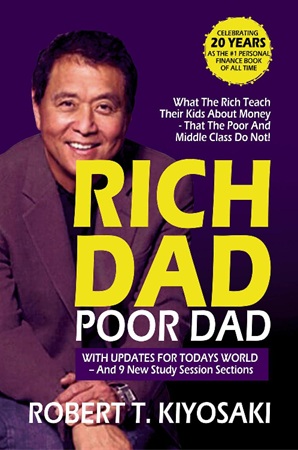
Rich Dad Poor Dad by Robert Kiyosaki Book Summary
Smart Start-Up provides practical tools, checklists, and guides designed to help new entrepreneurs launch their business correctly from day one. Explore the full library of startup tools here.
Related Business Book Summaries
If you enjoyed reading the book summary of Rich Dad Poor Dad, you might also enjoy the following related book summaries:
Starting a business of your own?
Smart Start-Up provides tools, checklists, and guides to help new entrepreneurs launch correctly.